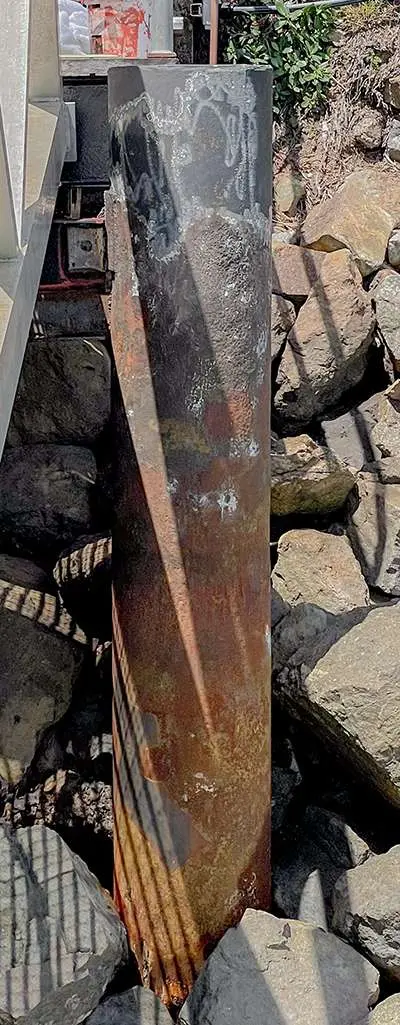
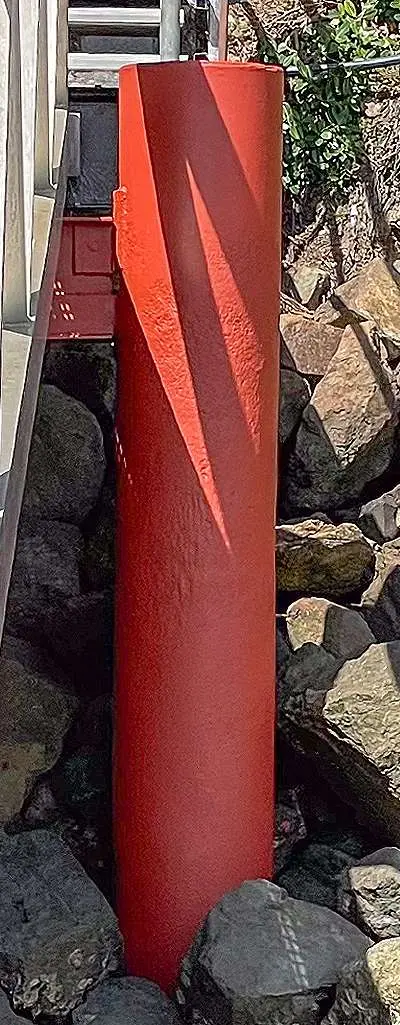
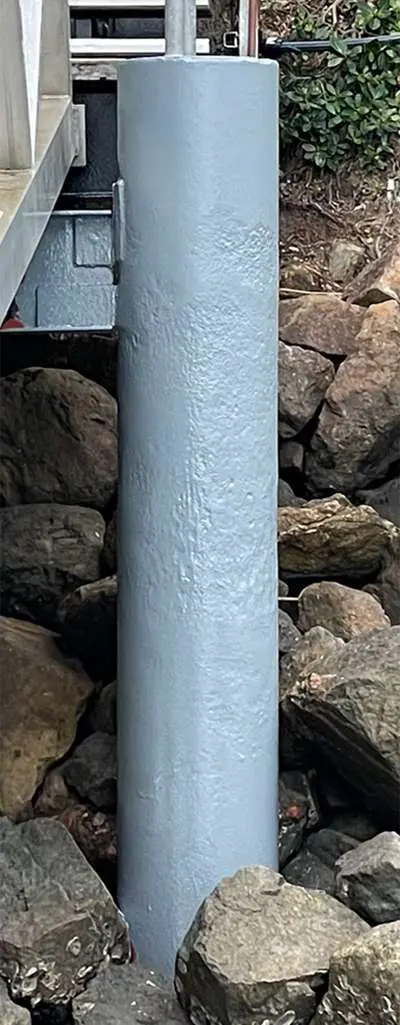
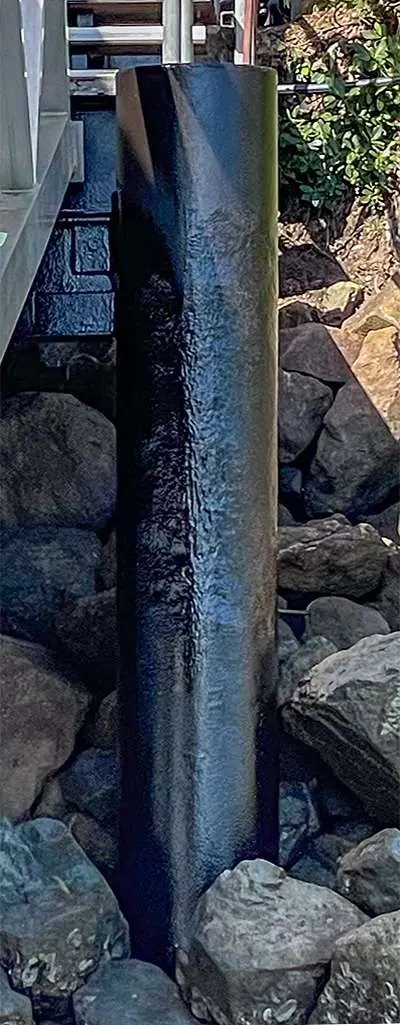
Application:Protective coating on corroded and submerged pier pylons
Products:NanoPrep, Belzona 5831, Wattyl DTM985
Customer Location:Far North Queensland, Australia
Application Date:July 2023
The Problem
A common challenge in addressing corrosion on pier pylons or any structure near water is that you are unable to perform abrasive blasting. Most protective coatings rely on this type of surface preparation to ensure long-term performance in these harsh environments. This is particularly difficult in the tidal zone where the pylons will be submerged in water within hours.
Until now, there have been no products on the market that provide a good long-term solution to this problem.
Introducing NanoPrep!
The Application
NanoPrep provides the perfect eco-friendly surface preparation solution. The product converts rust into an iron phosphate layer that adheres very strongly to the substrate through nanotechnology. The product also has high tolerance to chlorides due to its acidic base which neutralises the chlorides. This provides a high quality surface preparation for appropriate coatings to be used.
As the tide goes down, the pylons are pressure washed to remove loose rust scale. One coat of NanoPrep is applied and left for two hours to dry. Belzona 5831 moisture tolerant epoxy is then applied, which can cure underwater as the tide rises. The next day, a gentle pressure wash to remove surface chlorides and then a thin coat of NanoPrep is applied and left for two hours. The final coat of Wattyl DTM985 is then applied for UV and immersion protection.
Job done!
The Outcome
This application was completed 18 months ago at the time of publishing and is still in perfect condition.
Project Specification
Item
Detail
Industry
Marine
Application
Protective coating on corroded and submerged pier pylons
Environment
Sensitive marine tidal zone
Surface condition
Corroded steel in aggressive tidal environment
Surface preparation
Pressure wash and hand tool clean — no blasting
NanoPrep system
NanoPrep rust primer + Belzona 5831 + Wattyl DTM985